When homeowners hear the term fema elevation certificate, they often think it is just a form. However, that form depends on careful survey work. Without accurate measurements, FEMA may delay or deny approval. Many property owners only learn this after they face insurance problems, loan delays, or permit issues.
In Bullhead City, where desert land meets river influence, survey accuracy matters even more. Even small elevation mistakes can cause major paperwork problems. Because of this, knowing what FEMA checks can help you avoid stress, delays, and extra costs.
Why FEMA Rejects So Many Elevation Certificates
Most rejections happen because of survey mistakes, not flood risk. Many homeowners think FEMA denies certificates because their home sits too low. In truth, that rarely causes rejection. Instead, problems usually come from missing data or unclear measurements.
For example, FEMA may flag wrong elevation references, missing benchmark ties, incorrect vertical data, or unclear numbers. Even tiny mistakes can delay approval for weeks. During that time, lenders and insurance companies may pause applications. As a result, homeowners often deal with stress, delays, and extra fees.
What FEMA Reviews Before Approval
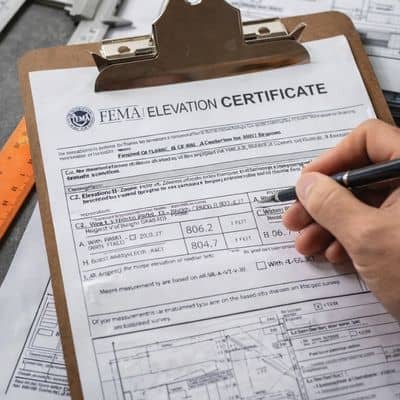
FEMA does not just glance at the form and approve it. Instead, the agency carefully checks the survey data. Many certificates first go through an automated review system. If anything looks wrong, FEMA sends the file for manual review.
Manual reviews take more time. They also lead to requests for fixes. Because of this, careful survey work from the start helps prevent long delays.
In simple terms, FEMA checks three main things. They confirm that the measurements match real ground conditions. They verify that the data connects to known elevation points. They also confirm that survey methods meet accuracy rules. If any part fails, approval slows down.
The Most Important Survey Data FEMA Checks
One of the most important values FEMA reviews is the lowest adjacent grade. This is the lowest ground point touching the building. FEMA compares this number to flood levels. Even small mistakes can change flood risk results. Surveyors must measure this point carefully. Rough estimates, phone GPS readings, and visual guesses often fail FEMA checks.
Another key measurement is the finished floor elevation. This shows how high the lowest living floor sits. FEMA studies this number closely because it affects insurance ratings. Errors happen when surveyors measure the wrong floor, rely on building plans, or mix up garage floors with living space.
Survey data must also match the correct elevation reference system. FEMA requires NAVD88. Many older reference points still use NGVD29. When surveyors mix these systems, the numbers become wrong. This mistake often leads to rejection.
FEMA also requires ties to known benchmarks. These points confirm accuracy. Without them, FEMA cannot trust the data. In Bullhead City, older neighborhoods sometimes lack modern survey markers. Because of this, surveyors must extend control carefully to keep results accurate.
Building type also matters. Crawlspace homes, slab homes, and raised homes all require different measurement methods. If the building type is listed wrong, FEMA may reject the certificate.
Flood map placement plays a role as well. Survey data must match FEMA flood maps. Even small location errors can move a property into the wrong flood zone. That leads to extra review.
Finally, FEMA reviews photos. Clear photos show building details and measurement points. Poor images, missing labels, or bad angles often slow down approval.
Common Survey Mistakes That Cause Rejections
Several technical mistakes often lead to resubmissions. These include measuring the wrong floor, choosing the wrong ground point, using the wrong reference system, relying on estimated benchmarks, and using low-accuracy GPS tools.
These mistakes may seem small. However, they often cause long delays. Because of this, careful survey work helps avoid many problems.
Why Bullhead City Faces Extra Review
Bullhead City has unique survey challenges. Mixed desert land hides small elevation changes. Older neighborhoods lack modern markers. River movement can also shift ground levels over time.
Because of this, FEMA often checks certificates from this area more closely. Accurate survey work becomes even more important for homeowners, builders, and buyers.
What Happens During FEMA Manual Reviews
When FEMA flags a certificate, it enters manual review. During this process, technicians double-check all measurements and reference points.
Manual reviews often delay approvals for weeks. During that time, loan closings, refinancing, and permits may stop. Because of this, avoiding manual review helps save time and stress.
How Good Survey Data Prevents Delays
High-quality survey work helps approvals move faster. Accurate measurements pass FEMA checks more easily. Lenders and insurance companies also accept the results faster.
On the other hand, poor data often leads to repeat site visits, revised paperwork, delayed closings, and higher costs. Professional surveying helps protect both time and money.
What to Ask Before Hiring a Surveyor
Before hiring someone to prepare your fema elevation certificate, ask a few simple questions. Ask which elevation system they use. Ask if they tie measurements into known benchmarks. Confirm how they check flood map placement. Also ask what quality checks they perform before submitting the form.
Clear answers show careful work and strong standards.
Final Thoughts
A fema elevation certificate may look simple, but the survey data behind it matters greatly. In Bullhead City, accurate measurements help prevent delays, extra costs, and insurance problems.
Instead of treating the certificate as simple paperwork, see it as protection for your investment. When survey data meets FEMA standards, approvals move faster and transactions stay smooth.
Good data brings peace of mind — and that peace matters.