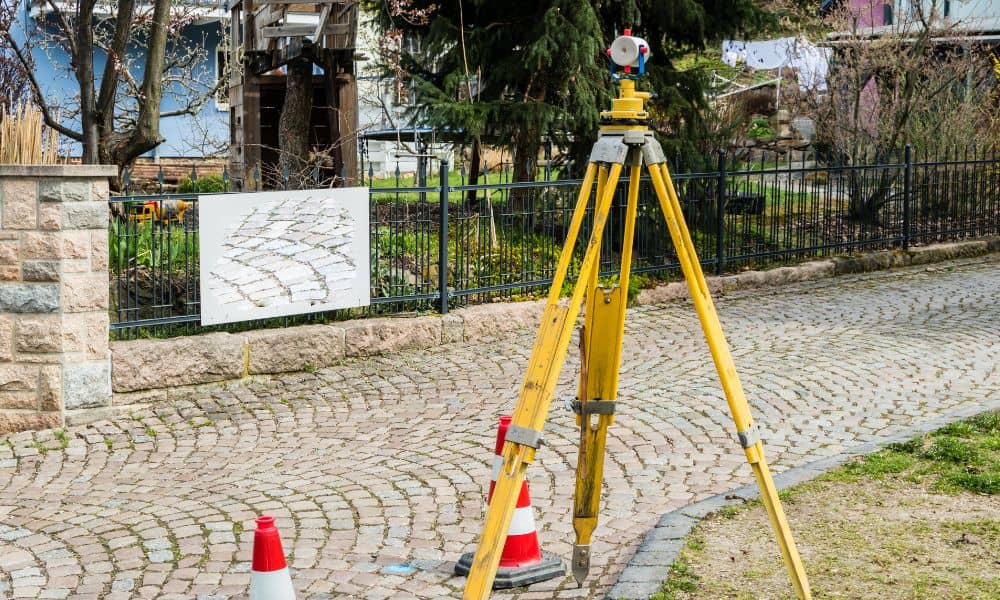
Most land disputes don’t start with bad neighbors. Instead, they start with bad assumptions. Today, people trust online maps, satellite images, and listing diagrams. They zoom in, draw a line, and feel confident. However, confidence is not proof. When a real conflict begins, only one thing settles the issue: a boundary line survey.
Recently, several property disputes have gone viral because both sides believed they had the “right” boundary. Each side showed maps and screenshots. Yet when survey evidence entered the case, the story changed. That pattern repeats again and again.
Why Modern Property Disputes Start With Confident but Wrong Proof
Right now, more property data sits online than ever before. You can pull parcel lines, aerial images, and lot shapes in seconds. Because of that, many owners believe they already know their boundaries.
But here’s the problem. Most public maps include a small disclaimer: not for legal use. People rarely read that part.
Still, when a disagreement starts, each side brings their “evidence.” One shows a GIS map. The other shows a listing sketch. Both feel sure. Meanwhile, neither document holds legal weight.
A boundary line survey works differently. It does not rely on rough overlays. Instead, it relies on field measurement, recorded documents, and physical evidence on the ground.
The Most Common Fake Boundary “Proof” People Trust Today
Let’s be direct. Many tools help with general reference. However, they do not replace a boundary line survey.
For example, people often trust:
Online parcel maps. Real estate listing lot diagrams. County GIS lines. Tax assessor maps. Satellite measuring tools. Old appraisal drawings. Builder plot plans
These tools help with planning and viewing. However, they do not establish legal boundaries. Lines on these maps may shift by several feet — sometimes more. That gap alone can cause a serious land conflict.
Even worse, different websites often show different lines for the same property. So which one is correct? In truth, none of them count as legal proof.
Why Digital Maps and Parcel Apps Create Boundary Confusion
Digital maps look precise. Lines appear sharp. Measurements show numbers. Therefore, users trust them.
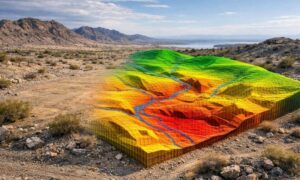
However, map overlays stretch and compress based on projection. Zoom level changes line thickness. Data updates arrive slowly. Some parcels rely on very old records.
As a result, what looks exact on a screen may sit far off in the field.
Phone GPS adds another problem. Consumer GPS often drifts several feet. Trees, terrain, and buildings make that error worse. So when someone stands on a “blue dot” and claims a boundary, they guess — they do not measure.
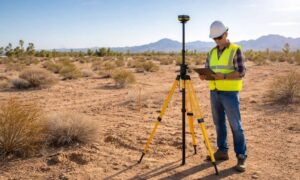
A boundary line survey uses professional instruments, not phone signals. That difference matters.
What Actually Counts as Boundary Line Survey Proof
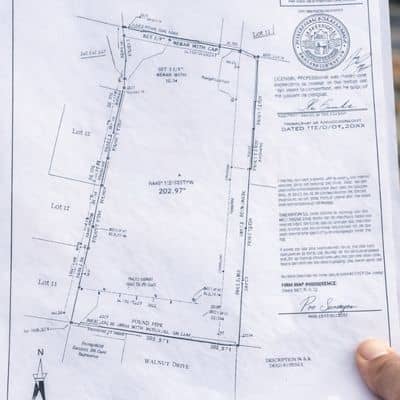
So what makes survey proof different?
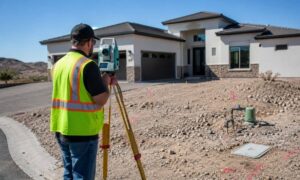
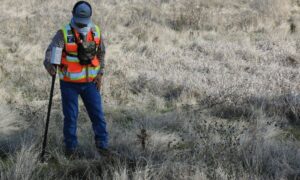
A boundary line survey follows a strict process. First, the surveyor studies recorded plats and deeds. Next, they analyze boundary calls and measurements. Then they visit the site and search for original monuments. After that, they run precise field measurements using calibrated equipment.
They do not stop at one source. Instead, they compare multiple records and physical clues. They weigh evidence. They resolve gaps. Finally, they produce a certified survey drawing.
Key proof elements include:
Recovered corner monuments. Recorded subdivision plats. Deed descriptions. Measured boundary lines. Evidence comparison. Licensed surveyor certification.
Because of this process, the result holds legal standing — not just visual accuracy.
When Two Deeds Conflict, Assumptions Collapse Fast
Here’s something most owners never expect: deeds sometimes conflict.
One deed may call for a distance. Another may call for a monument. One record may show an angle that doesn’t close. So which one wins?
Surveyors follow an evidence priority system. Original monuments usually outrank measurements. Senior rights often outrank newer descriptions. Physical evidence often outranks paper distance.
Without training, people guess wrong here. That guess leads to disputes. A boundary line survey resolves the conflict using accepted standards — not opinion.
The Danger of “It’s Always Been That Way”
Many land fights include this phrase: “It’s always been that way.”
For instance, someone points to a driveway edge. Another points to a cleared strip. Someone else points to a tree row. These features look permanent. Therefore, people treat them as boundaries.
However, occupation lines are not always property lines.
Driveways move. Fences shift. Grading changes. Landscaping spreads. Over time, visual clues drift away from legal limits.
Long use does not automatically create ownership. In many cases, only a boundary line survey reveals the truth.
When Assumption Boundaries Hit Legal Review
Assumptions often survive — until paperwork begins.
During title review, boundary questions surface. During permit review, setbacks get checked. During construction layout, lines get staked. At that moment, rough maps fail.
Projects then pause. Plans get revised. Costs rise.
Lenders, attorneys, and title companies prefer survey proof because it reduces risk. They cannot rely on screenshots. They require certified measurements.
So while assumptions feel safe early, they collapse under formal review.
Why Courts Trust Boundary Line Survey Evidence
Courts need defensible proof. A boundary line survey provides that proof.
Licensed surveyors carry professional responsibility. They follow state standards. They document their methods. They certify their results.
Because of that, courts accept survey documents as expert evidence. Informal maps and diagrams do not meet that bar.
So when disputes reach mediation or court, survey proof usually decides the outcome.
A Simple Truth: Measurement Ends Arguments
Land conflicts grow from belief. They end with measurement.
Right now, modern tools give people confidence without certainty. That gap causes trouble. A boundary line survey closes that gap with verified facts.
If you plan to build, sell, divide, or defend property, do not rely on assumptions. Get proof first. It costs less than a dispute and saves far more stress.
In modern land conflicts, opinions get loud. However, measurements speak last — and they win.