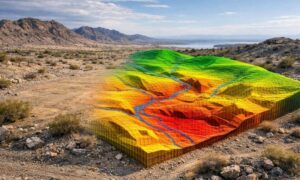
If you just finished building something on your property, you may have heard the term as-built survey come up during the permit process. A lot of property owners are not sure what it means or why they need one.
What Is an As-Built Survey?
An as-built survey is a survey done after construction is finished. It shows where everything was actually built on the property, including structures, utilities, and grading. It is compared to the original plans to confirm that the final result matches what was approved.
When a building project starts, there is a set of approved plans. Those plans show where everything should go. But during construction, small changes happen. A wall gets shifted a few inches. A utility line runs a slightly different path. Grades get adjusted in the field.
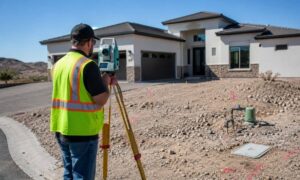
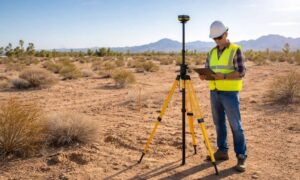
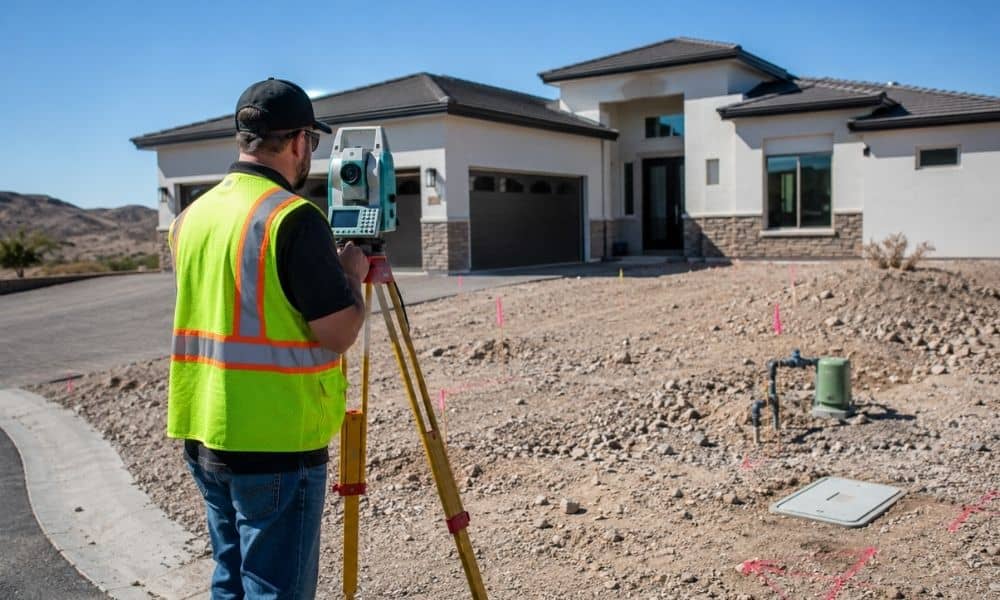
An as-built survey captures all of those real, final positions. A licensed land surveyor visits the site after construction and measures exactly where everything ended up. The result is a stamped document showing what was actually built, not just what was planned.
According to the Construction Industry Institute, around 80% of construction projects have at least one change from the original design during the build. That makes as-built documentation important on almost every project.
What Does an As-Built Survey Document?
An as-built survey records the final positions of structures, utility lines, driveways, grading, and setbacks from property lines. It gives lenders, permit offices, and future buyers an accurate record of what exists on the property.
A standard as-built survey will typically include:
- The footprint and location of all structures
- Finished floor elevations
- Utility line locations, including water and sewer laterals
- Driveways, sidewalks, block walls, and fencing
- Setback distances from all property lines
- Any grading changes that affect drainage
The surveyor compares these measurements to the original approved plans. Any differences are noted in the final report. This gives the property owner, the permit office, and the lender a clear picture of what is on the ground.
When Do You Need an As-Built Survey?
You need an as-built survey when closing out a construction permit, satisfying a lender requirement after building, or preparing a property for sale. In Lake Havasu City, it is commonly required before a Certificate of Occupancy is issued.
Closing Out a Building Permit
Mohave County and the City of Lake Havasu require as-built documentation before they issue a final Certificate of Occupancy. A CO is the document that says your building is legally ready to occupy. Without one, your structure is still considered incomplete in the eyes of the county, even if you are already living or working in it.
Satisfying Your Construction Lender
Many lenders require an as-built survey before releasing the final draw on a construction loan. They want proof that everything was built as approved and that no setback violations occurred during construction. Skipping this step can delay your final payment from the lender.
Selling Improved Property
When you sell a property that has been improved or built on, a title company may ask for a current survey to confirm all structures are where they should be. An as-built survey gives buyers and their lenders confidence that the property matches its legal records.
Resolving Disputes
If a neighbor, contractor, or municipality challenges where something was built, an as-built survey is the official document used to settle the question. It carries legal weight because it is signed and stamped by a licensed surveyor.
Why This Matters in Lake Havasu City
Lake Havasu City has seen steady growth over the past several years. The U.S. Census Bureau shows the city grew by more than 15% between 2010 and 2020, and residential construction has continued to increase since then. More projects mean more permit closures, and more permit closures mean more as-built surveys being required.
The terrain in the Lake Havasu area also plays a role. Many lots sit near desert washes or have grading challenges that make accurate post-construction documentation especially important. When drainage features shift during construction, an as-built survey creates the official record of where things ended up.
Under Arizona Revised Statutes Section 32-121, only a licensed Professional Land Surveyor can prepare and stamp a survey in Arizona. This means the as-built document you get is a legally recognized record, not just an informal drawing.
How Much Does an As-Built Survey Cost?
As-built surveys typically cost between $800 and $3,500. The price depends on the size of the property, the number of improvements, and how quickly you need the finished document.
Factors that affect the cost include:
- Size of the lot and number of structures
- How many utility systems need to be documented
- Whether a rushed turnaround is needed
- Site access and terrain difficulty
The cost of an as-built survey is almost always far lower than the cost of a delayed Certificate of Occupancy, a stalled loan, or a legal dispute over where something was built. Most residential as-built surveys are completed within 5 to 10 business days after fieldwork.
Frequently Asked Questions
Is an as-built survey the same as a record drawing?
Yes. They refer to the same thing. As-built is the term used most in the field. Record drawing is the term used by engineers and government offices. Both describe the post-construction documentation of what was actually built.
Can I get an as-built survey on an older home?
Yes. As-built surveys are not limited to new construction. Property owners order them on existing homes when they need accurate documentation for a renovation permit, a sale, or a title insurance requirement.
Who orders the as-built survey, the contractor or the owner?
Either one can place the order. But the property owner is responsible for making sure permit conditions are met. Many owners order it directly so they control the timeline and receive the final documents themselves.
Do I need one for a block wall or fence?
In most cases, yes, if the structure required a permit. Mohave County may require as-built confirmation that a permitted wall or fence was built within the approved setbacks and on the correct property line.