A Short History on Land Surveying

Land surveying is one of the the oldest professions anywhere. After any two individuals own property on opposite sides of a line – land surveying is important.

Land surveying is fascinating. The strategy used aim to determine which section of land is owned by whom, hopefully ending arguments for good.

To put it briefly, surveying is really a process using mathematical methods for surveying land to determine its ownership.

The first accounts of surveying land extends back to ancient Egypt. Experts have discovered evidences that the ancient Egyptians used basic geometry to redraw the lines of boundary when the Nile River overflowed. An Egyptian land register going back 3000 BC was found.

Following the Egyptians, the Romans – also the most powerful civilizations within the ancient world – practiced land surveying. They took it a pace further and made “land surveyor” an official position inside the Empire. These folks called agrimensores, often called Corpus Agrimensorum Romanorum. Despite the fact they used rather simple tools, these people were very thorough with their jobs and would create straight lines and proper angles with the use of these tools. As soon as the lines were measured, they’d create shallow ditches to mark the lines. Actually, much of the furrows they made continue to exist today.

One of several recorded land surveying of the “modern” times belongs to William the Conqueror who wrote the Domesday Book in 1086. This book is really a menu of names of land owners, the amount of land they owned as well as other information about the land. While it was a substantial volume of information during this period, the pieces of information weren’t 100% correct. The locations just weren’t accurate and the maps were not made to scale.

Among history’s greatest icons have also been an ardent surveyor – Napoleon Bonaparte. The interest in surveying land was really just a product of his wish to conquer the earth. Napoleon Bonaparte founded a registry referred to as cadastre. This includes a registry of properties of a county, ownership details, locations and as much information concerning the land’s value. Yes, Napoleon Bonaparte can be regarded as a land surveyor – plus a very smart man.

The strategies put to use in land surveying also have evolved over the centuries, over time. Long ago, people would use whatever could help them determine the distance from one point to another. This implies using chains with links and even ropes. Not surprisingly, this didn’t give accurate results but they did not have the technology we now have.

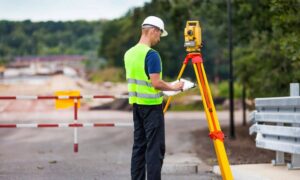
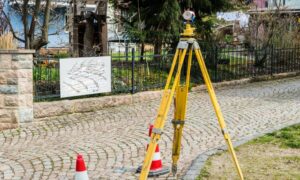
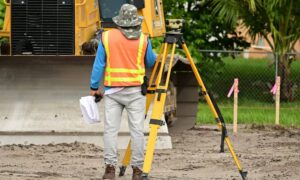
Today, land surveyors possess the best technologies to assist them with their job. There is GPS, or Global Positioning System, which is quite possibly the most accurate technologies available today. Total stations are also crucial to a land surveyor, which employs the utilization of an EDM or Electronic Distance Measurement device together with a theodolite which enables for further precise angle and distance measurements.


author avatar
Surveyor

More Posts

Surveyor performing a commercial land survey at a multi-story construction site
land surveying
gagan

Why Every Commercial Land Survey Changed in 2026

If you’re buying, refinancing, or developing commercial property, something important just changed. In February 2026, new national standards took effect for commercial property surveys. Because of that, the way a land survey gets prepared for many commercial deals now follows updated rules. At first, this may sound technical. However, the

Read More »
Licensed land surveyor using a total station to measure property boundaries during an alta land title survey on a commercial site
alta survey
Surveyor

2026 Alta Land Title Survey Changes Explained

If you are buying commercial property in Arizona, you may have heard that 2026 brought important changes to the alta land title survey standards. At first, the update may sound technical. However, one part affects closings more than most people expect: how encroachments must be reported. Encroachments may seem small.

Read More »
Licensed land surveyor performing a boundary line survey using a total station to verify property lines
boundary surveying
Surveyor

Boundary Line Survey Proof vs Costly Assumptions

Most land disputes don’t start with bad neighbors. Instead, they start with bad assumptions. Today, people trust online maps, satellite images, and listing diagrams. They zoom in, draw a line, and feel confident. However, confidence is not proof. When a real conflict begins, only one thing settles the issue: a

Read More »
Aerial view of desert land development showing how drone mapping helps planners understand terrain and growth patterns
land surveying
Surveyor

How Drone Mapping Is Changing Desert Land Development

Phoenix keeps growing. New subdivisions, commercial centers, and infrastructure projects continue to spread across the desert. At the same time, land development here comes with challenges you don’t see in many other cities. Extreme heat, wide-open parcels, and subtle terrain changes can turn small planning mistakes into costly delays. Because

Read More »
Licensed land surveyor measuring ground and building height for a FEMA elevation certificate survey on a residential property
flood damage
Surveyor

Exact Survey Data for FEMA Elevation Certificate Approval

When homeowners hear the term fema elevation certificate, they often think it is just a form. However, that form depends on careful survey work. Without accurate measurements, FEMA may delay or deny approval. Many property owners only learn this after they face insurance problems, loan delays, or permit issues. In

Read More »
Land use planning drawing showing how boundary surveys define property lines during zoning updates
boundary surveying
Surveyor

Why Boundary Surveys Matter When Land Use Rules Change

Cities change over time. Roads grow wider. Zoning rules shift. Long-term plans are updated as communities grow. When this happens, many property owners think nothing will affect them unless construction starts nearby. That is not true. The first changes almost always happen on paper. This is why boundary surveys become

Read More »